
0%

Choosing China’s best Laminated Frame DC Motors requires more than comparing catalog prices. Global buyers need evidence of efficiency, durability, traceability, and application fit.

The International Energy Agency and the IEA 4E Electric Motor Systems Annex report that motor-driven systems consume nearly half of global electricity. This makes small design improvements commercially important. The International Energy Agency’s Global Energy Review also shows continuing electrification across transport, manufacturing, and building equipment. These trends support demand for compact, controllable DC motors. They do not guarantee that every supplier delivers equal quality.

Laminated Frame DC Motors use stacked steel laminations to reduce eddy-current losses and improve thermal behavior. In a workshop, this can mean steadier speed, cooler housings, and longer brush life. It depends on the lamination grade, stack pressure, winding design, commutator quality, and assembly control. Austin Hughes, author of Electric Motors and Drives, described the electric motor as “the workhorse of industry.” His point remains practical. A motor must survive real loads, not only pass a brochure test.

For global buyers, China offers broad manufacturing capacity and competitive customization. However, the lowest quotation may conceal weak insulation, inconsistent torque, or incomplete test records. Buyers should request IEC 60034-related test evidence, ISO 9001 process records, load curves, noise data, and sample validation. Check performance at the actual voltage, duty cycle, temperature, and mounting position.

There is no universal “best” motor. A medical pump, warehouse conveyor, and battery-powered actuator need different compromises. That is easy to overlook. This guide examines Chinese suppliers through engineering evidence, production experience, and buyer-side risk, while acknowledging one uncomfortable truth: specifications can look complete and still be incomplete.
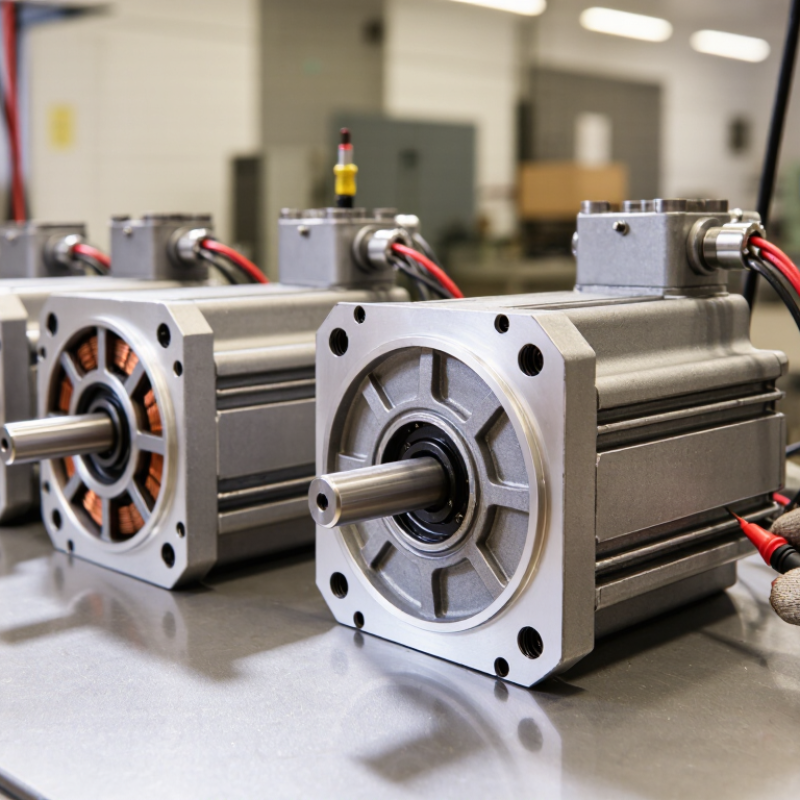
China Best Laminated Frame DC Motors for Global Buyers?

What Are Laminated Frame DC Motors?

Laminated frame DC motors use stacked electrical steel sheets instead of one solid magnetic frame. Thin insulation separates each layer, limiting eddy-current losses during changing magnetic fields. This design can reduce heat, improve response, and keep the motor compact. It is useful in conveyor controls, medical mechanisms, printers, and battery-powered equipment.

The IEA reports that electric motors and motor-driven systems consume about 45% of global electricity. The U.S. Department of Energy also estimates motor-driven equipment uses roughly 69% of industrial electricity in the United States. These figures explain why small efficiency gains matter. However, a laminated frame alone does not guarantee high efficiency. Winding quality, air-gap accuracy, brush contact, and load matching remain critical.

A practical inspection should check the lamination thickness, burrs, insulation coating, shaft runout, and temperature rise. Look closely at the edges. Poor stacking can create magnetic losses and vibration. Buyers should request no-load current, rated-load efficiency, noise, and endurance data from controlled tests. Some specifications look impressive but lack test conditions. That deserves scrutiny. For global applications, confirm voltage tolerance, commutation stability, insulation class, and compliance documentation before comparing prices.

How Laminated Frames Improve DC Motor Performance

For global buyers, laminated-frame DC motors offer a practical performance advantage. Their stacked electrical-steel sheets interrupt circulating eddy currents inside the magnetic path. This helps reduce iron losses when the motor changes speed or load frequently. Less wasted energy means lower internal heat during demanding operation.

The difference becomes clear on a test bench. At 24 volts, a motor with a well-built laminated frame can respond smoothly to repeated starts and stops. Its casing may stay cooler after several load cycles. That matters in conveyors, small pumps, medical equipment, and automated mechanisms. Laminations can also support quieter operation by reducing magnetic vibration, although the result depends on rotor balance and assembly accuracy.

Construction quality still decides the outcome. Check the steel grade, lamination thickness, insulation between sheets, and frame alignment. Poor stacking can create unwanted magnetic paths. It can also increase vibration. Bearing fit, brush quality, and ventilation deserve equal attention. A laminated frame cannot repair weak design elsewhere.

I have seen buyers focus only on rated power. That is a mistake. Duty cycle, ambient temperature, start frequency, and controller type often matter more. Ask for measured efficiency, temperature-rise data, and load-test conditions. Marketing figures without test details are difficult to trust. In some low-speed applications, the added cost may bring limited value. Careful comparison remains necessary.

China Best Laminated Frame DC Motors for Global Buyers? - How Laminated Frames Improve DC Motor Performance

Performance Dimension Laminated-Frame DC Motor Conventional Solid-Frame DC Motor Why It Matters to Global Buyers Technical Basis
Frame Construction Thin electrical-steel laminations are stacked and bonded or clamped to form the magnetic frame. Uses a solid steel or cast frame with higher electrical conductivity through the bulk material. Provides a lighter magnetic structure and supports more efficient high-speed operation. Laminations interrupt circulating current paths inside the magnetic steel.
Eddy-Current Loss Lower when the lamination thickness, insulation coating, and magnetic grade are properly selected. Generally higher when the frame is exposed to changing magnetic flux. Lower core loss can reduce heat generation and improve continuous-duty reliability. Electrical insulation between laminations increases resistance to circulating eddy currents.
Typical Efficiency Benefit Often supports an improvement of approximately 1–5 percentage points in applications with significant alternating magnetic flux. May provide adequate efficiency where flux variation is limited or operating speed is low. Can reduce electrical energy consumption over long operating cycles. The actual improvement depends on motor size, speed, load profile, flux density, and controller operation.
Thermal Performance Lower internal core losses can help reduce the temperature rise of the frame and nearby windings. Higher core losses may contribute to additional heat under dynamic or high-speed conditions. Lower temperature rise can improve insulation life and reduce thermal derating. Insulation systems commonly use temperature classes such as Class B, F, or H; the complete motor design determines the allowable rise.
High-Speed Capability Well suited to variable-speed operation when balanced rotor design, bearings, commutation, and cooling are also adequate. Can experience increased magnetic and thermal losses as speed and flux variation increase. Useful for pumps, fans, automation equipment, traction auxiliaries, and other variable-speed systems. Laminated magnetic circuits reduce frequency-related losses caused by changing flux during operation.
Dynamic Response Supports faster speed changes when paired with a suitable controller and correctly sized armature. May have greater thermal stress during repeated acceleration and deceleration. Suitable for applications requiring frequent starts, stops, reversing, or speed adjustment. Reduced magnetic loss helps manage heat during transient operating conditions.
Weight and Power Density A laminated frame can help achieve lower mass or higher power density within a similar package size. May require more material or cooling capacity to manage comparable losses. Lower motor mass can simplify equipment integration and transportation. Power density also depends on winding design, magnet strength, cooling method, and allowable temperature rise.
Noise and Vibration Can reduce electromagnetic excitation in some operating ranges, but assembly quality strongly affects results. May produce higher electromagnetic vibration under certain changing-flux conditions. Important for precision machinery, laboratory equipment, office devices, and indoor installations. Noise also depends on commutator condition, brush design, rotor balance, bearings, PWM frequency, and mounting.
Operating Voltage Common DC ratings include 12 V, 24 V, 48 V, 90 V, 180 V, and other application-specific values. Available across similar voltage ranges. Voltage selection should match the power supply, controller, insulation system, and local electrical requirements. Voltage rating is not determined by the frame alone; winding design and insulation coordination are critical.
Duty Rating Can be designed for continuous duty or intermittent duty, including S1 and other duty cycles defined by IEC 60034-1. Also available for continuous and intermittent duty, depending on thermal design. Buyers should compare the required load profile rather than relying only on rated power. Duty capability depends on current, cooling, ambient temperature, enclosure, speed, and allowable temperature rise.
Cooling Options Natural convection, external fan cooling, or forced ventilation can be used according to power and enclosure requirements. Uses similar cooling methods, but may need more cooling capacity when core losses are higher. Cooling selection affects service life, enclosure size, noise, and installation flexibility. Cooling performance should be evaluated together with ambient temperature, altitude, ingress protection, and duty cycle.
Maintenance Requirements Brushes and commutators still require inspection in brushed designs; the laminated frame itself is normally maintenance-free. Has similar brush and commutator maintenance requirements if it is also a brushed motor. Maintenance intervals should be based on current density, duty cycle, contamination, speed, and brush wear. Lamination reduces magnetic loss but does not eliminate mechanical wear components.
Typical Applications Variable-speed drives, robotics, medical equipment, actuators, conveyors, fans, pumps, and precision machinery. Cost-sensitive drives, low-speed equipment, and applications with limited magnetic flux variation. Application suitability depends on torque, speed, control method, environment, and required service life. Motor selection should be based on a complete operating envelope rather than frame construction alone.
Buyer Verification Checklist Request rated voltage, rated speed, continuous and peak torque, efficiency curve, temperature-rise data, insulation class, IP rating, duty cycle, no-load current, stall current, allowable overspeed, bearing type, brush specification, dimensional drawings, and applicable test reports. Helps compare suppliers on equivalent technical conditions. Performance values should be confirmed through the motor datasheet and test conditions supplied for the exact configuration.

Note: The performance comparisons are general engineering guidance. Actual results vary with motor size, lamination material and thickness, magnetic circuit design, winding configuration, controller settings, cooling method, load profile, and manufacturing tolerances.

Key Specifications for Global Motor Buyers

For global buyers, selecting the best laminated-frame DC motor starts with measurable specifications, not catalog language. The IEA reports that electric motor systems consume nearly half of global electricity. This makes efficiency, duty cycle, and load matching commercially important. Request rated voltage, continuous torque, peak torque, speed range, no-load current, and stall current. A 24 V motor running at 3,000 rpm may suit automation, but it can fail quickly under repeated high-load starts.

Frame dimensions must match the existing mounting pattern. Ask for shaft diameter, shaft length, keyway details, bearing type, and allowable radial load. Insulation class, thermal protection, brush material, and commutator design also affect service life. IEC 60034 provides widely used requirements for rotating electrical machines, including temperature rise and performance testing. Confirm whether test results were measured at rated load, because unloaded efficiency can look impressive.

Environmental data deserves equal attention. IP rating, operating temperature, humidity limits, vibration tolerance, and storage conditions should appear on the technical sheet. The U.S. Department of Energy notes that motor systems represent about 70% of industrial electricity use in the United States. Small efficiency losses can therefore become visible operating costs. I would also request endurance curves and production inspection records. A perfect laboratory result is not enough. Real machines experience dust, voltage variation, and imperfect alignment. That detail is often underestimated.

Comparing Chinese Manufacturers and Motor Configurations

China’s laminated-frame DC motor sector offers broad customization, but “best” depends on configuration and application. Chinese manufacturers commonly supply permanent-magnet brushed motors, wound-field motors, and electronically commutated designs. Laminated steel structures can reduce magnetic losses and support more stable thermal performance. However, frame lamination alone does not guarantee efficiency.

Configuration matters more than appearance. A 24V or 48V permanent-magnet motor suits compact conveyors, medical equipment, and battery systems. A wound-field motor may provide better control across changing loads, but it usually requires more components and maintenance. Brushed designs remain cost-effective, yet brush wear needs attention in dusty factories. The U.S. Department of Energy reports that motor-driven systems use about 70% of industrial electricity. The IEA also estimates motor systems consume roughly 53% of global electricity. Small efficiency gains matter.

In supplier evaluations, buyers should compare rated torque, duty cycle, insulation class, thermal rise, shaft tolerance, and test documentation. A practical factory check includes load testing, vibration measurement, and inspection of commutator finish. Request IEC 60034-related test evidence where applicable. Ask whether samples match production units. Sometimes, they do not. That gap deserves scrutiny. The lowest quotation is rarely the best answer. A reliable manufacturer should explain winding choices, lamination thickness, protection rating, and controller compatibility without hiding behind vague efficiency claims.

China Best Laminated Frame DC Motors for Global Buyers?

Typical Efficiency by Motor Configuration

The chart compares representative rated-load efficiency levels commonly used when evaluating laminated-frame DC motor configurations. Brushless DC motors generally provide the highest efficiency, while planetary gearing improves torque multiplication but introduces additional mechanical losses. Values are indicative engineering benchmarks and are not linked to any specific company or brand.

Quality, Certification, and Export Considerations

China Best Laminated Frame DC Motors for Global Buyers?

For global buyers, motor quality begins with measurable construction, not attractive photographs.

In export projects, I inspect the laminated frame, shaft alignment, winding insulation, and brush contact surfaces. Thin burrs on steel laminations can increase vibration and heat. Ask for dimensional reports and no-load current records. Small details matter. A stable motor should show consistent speed under repeated testing. Still, laboratory results cannot replace production experience. A sample may perform well while batch consistency remains uncertain.

Certification must match the destination market and the motor’s intended application.

Relevant evidence may include IEC-based test reports, CE compliance documentation, or North American safety approvals. These terms are not interchangeable. Request the certificate number, testing scope, issuing laboratory, and validity details. Check whether the document covers the exact motor model. Some suppliers provide generic files, which creates avoidable risk. This is often overlooked.

Export readiness also includes traceable records and practical packaging.

Confirm serial labels, inspection photos, wiring diagrams, and English technical instructions. Moisture barriers and shock-resistant cartons can protect motors during long ocean shipments. Ask how rejected units are handled before signing a purchase agreement. One uncomfortable lesson is that low prices often hide weak after-sales procedures. Delivery schedules can also shift when customized shafts or connectors require separate production. Better evidence beats confident promises.

FAQS

What is a laminated frame DC motor?

It uses stacked electrical steel sheets instead of one solid magnetic frame. Thin insulation separates the layers.

How can lamination reduce motor losses?

The layers interrupt circulating eddy currents during changing magnetic fields. This can reduce heat and improve response.

Where are these motors commonly useful?

They suit conveyors, printers, small pumps, medical mechanisms, and battery-powered equipment. Compact designs can fit tight spaces.

Does a laminated frame guarantee high efficiency?

No. Winding quality, air-gap accuracy, brush contact, and load matching still matter. The frame is only one part.

What should buyers inspect before purchasing?

Check lamination thickness, edge burrs, insulation coating, shaft runout, and temperature rise. Look closely at the edges.

Which test data should buyers request?

Ask for no-load current, rated-load efficiency, noise, endurance, and temperature-rise results. Test conditions must be clearly stated.

Can laminated frames make a motor quieter?

They may reduce magnetic vibration, especially during repeated starts and stops. Rotor balance and assembly accuracy remain important.

What operating details matter beyond rated power?

Review duty cycle, ambient temperature, start frequency, and controller type. Rated power alone can mislead buyers.

When might lamination provide limited value?

Low-speed applications may gain little from the added cost. Compare measured performance carefully, not attractive specifications alone.

What problems can poor stacking cause?

Poor stacking can create unwanted magnetic paths, extra losses, and vibration. A promising design can still disappoint.

Conclusion

Laminated Frame DC Motors are designed with stacked steel laminations that help reduce eddy-current losses, improve magnetic efficiency, and support more stable operation than many solid-frame alternatives. Their structure can contribute to lower heat generation, improved torque consistency, reduced weight, and longer service life when properly engineered. For global buyers, important specifications include rated voltage, power output, speed range, torque, duty cycle, efficiency, insulation class, protection rating, shaft dimensions, noise level, and operating environment.

When comparing Chinese manufacturers, buyers should evaluate motor configuration, customization capability, production consistency, testing procedures, lead times, and after-sales communication rather than relying only on price. Suitable suppliers should provide clear technical documentation, sample validation, traceable quality controls, and certifications relevant to the destination market. Export considerations may also include packaging, labeling, electrical compatibility, documentation, warranty terms, and transportation requirements. A careful technical and quality review helps international purchasers select reliable Laminated Frame DC Motors for industrial, automation, and equipment applications.

Elara

Elara

Elara is a dedicated marketing professional and a trusted voice behind the company’s expert blog. With a strong understanding of the company’s products, services, and target markets, Elara transforms complex information into clear, practical, and engaging content for customers, partners, and......