
Technical insights, expert guides, and industry news on DC motors, AC motors, and drive technology.
Choosing Heavy Duty Electric Motors for global use requires more than comparing horsepower and price. A motor that performs well indoors may struggle in coastal air, high altitude, or unstable power conditions. Selection should begin with the driven load, duty cycle, starting torque, speed range, and operating temperature. Record these values at the actual site. Do not rely only on a spreadsheet. A conveyor carrying wet aggregate needs different protection from a clean indoor pump. Small details matter. An unsuitable enclosure can allow dust or moisture to damage bearings early.
Engineers should match each motor with local voltage, frequency, phase configuration, and efficiency requirements. IEC and NEMA practices may differ, so nameplate data requires careful checking. Confirm the IP rating, insulation class, cooling method, and permitted altitude. A 460-volt, 60-hertz facility may not accept a 400-volt, 50-hertz motor without changes. Do not assume compatibility. That assumption fails. Variable frequency drive operation also requires suitable insulation and bearing-current protection, particularly on larger frames.
Reliable global use depends on support after delivery. Check spare-part availability, local technicians, warranty terms, and repair capacity before approval. Request verified test reports, efficiency data, and temperature-rise results from recognized manufacturers. Certification helps, but it cannot replace site validation. Salt spray, frequent starts, vibration, and restricted ventilation can reduce service life. A pilot installation can reveal weaknesses early. It may feel slower. However, it often costs less than an unexpected shutdown. The strongest choice balances performance, compliance, maintenance, and honest risk review throughout the motor’s operating life.
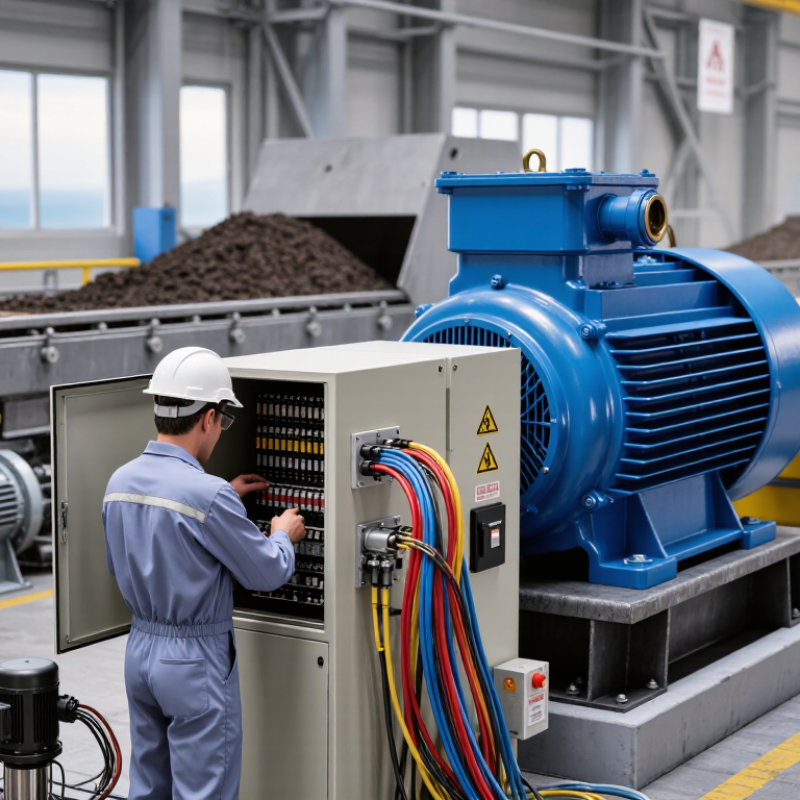
How to Choose Heavy Duty Electric Motors for Global Use
Define the application before comparing motor specifications. Start with the load. Record torque, speed, acceleration, and operating time. A conveyor, crusher, pump, and hoist create very different demands. Identify whether the motor runs continuously or cycles under heavy loads. Peak torque matters, especially during starting or sudden load changes. A motor sized only for normal running may overheat during repeated starts. An oversized motor can waste energy and perform poorly at light loads. Check reversing frequency, braking needs, and required speed control. These details influence the duty rating, cooling method, shaft design, and control system.
Operating conditions require equal attention. Note ambient temperature, altitude, dust, moisture, vibration, and corrosive vapors. Outdoor installations may need stronger enclosures and improved protection against water entry. High altitude reduces cooling capacity because the air is thinner. Hot rooms can also require derating. Measure the available voltage, frequency, and phase arrangement at the installation site. Do not assume every facility provides the same supply. Confirm local electrical requirements before ordering.
Build a duty profile from measured data, not guesses. Calculate starting torque, running torque, and thermal loading across the full cycle. Select suitable insulation, bearings, brakes, and feedback devices when necessary. A spreadsheet can look precise while hiding a poor assumption. Real loads often change after installation. Leave room for verification through site measurements and performance testing. If field data contradicts the original design, reassess the motor choice before repeated operation causes damage.
Selecting a heavy duty electric motor starts with the machine’s real workload, not its maximum label. Calculate required power from load, speed, and efficiency. Then verify starting torque, running torque, and overload demand separately. A conveyor carrying wet aggregate may need high starting torque, even when its running power seems modest. Oversizing can waste energy and reduce control quality.
Speed must match the driven equipment. Check whether direct coupling, gearing, or variable-speed control is practical. Duty ratings also matter. Continuous duty suits steady production, while frequent starts require a motor designed for repeated acceleration. Review ambient temperature, altitude, dust, moisture, and cooling conditions.
For global operation, confirm voltage, frequency, insulation class, enclosure protection, and applicable electrical certifications. A motor rated for one supply may perform poorly on another. This detail is easy to miss.
Tips: Record actual load measurements during a full shift. Compare cold-start current with operating current. Allow thermal derating in hot rooms or high elevations. Keep torque margins realistic, not excessive. Ask an experienced engineer to review the selection and installation drawings. My own early selections sometimes trusted catalog power too much. Field conditions changed everything. Verify shaft alignment, bearing loads, and brake requirements before ordering. Document the assumptions, because forgotten assumptions become expensive faults.
Choosing a heavy duty electric motor for global use starts with the actual power supply, not the catalog headline. Confirm the voltage, phase, frequency, and allowable variation at the installation site. A motor rated for 400 volts at 50 Hz may not perform correctly on a 460-volt, 60 Hz system. Speed, torque, current, and heating can all change.
Check the motor nameplate against the local electrical standard. IEC 60034 requirements are common in many markets, while other regions may follow different certification systems. Confirm whether the project requires specific testing, efficiency classes, insulation ratings, or enclosure protection. IP55 may suit a dusty indoor plant, but washdown areas can demand stronger protection. Ask the utility or qualified engineer for verified supply data.
Do not overlook frequency converters. Their output waveform, switching method, cable length, and grounding practice can affect bearing currents and insulation stress. Select insulation suitable for inverter duty when variable speed control is planned. In field assessments, I have seen motors fail early because voltage was checked, but frequency was assumed. That assumption was costly. A universal motor sounds convenient, yet it may sacrifice starting torque or efficiency in one country. Recheck the duty cycle, altitude, ambient temperature, and local installation rules before approval. Some selections still need revision after site measurements.
| Selection Dimension | Common Global Data | Relevant Standard or Practice | Heavy-Duty Selection Guidance |
|---|---|---|---|
| Supply Frequency |
|
IEC 60038 defines standard supply voltages and frequency conditions. Motor ratings must be checked for the intended frequency. | Do not assume that a 50 Hz motor can deliver the same speed, torque, and output at 60 Hz. Confirm rated speed, voltage-to-frequency ratio, current, cooling, and load torque. |
| Low-Voltage Three-Phase Systems |
|
IEC 60038 provides internationally recognized nominal voltage values. Local utilization voltage and permissible variation must be verified with the electrical utility or project specification. | Select the motor nameplate voltage to match the line-to-line supply. For dual-voltage motors, verify the correct winding connection before commissioning. |
| Connection Voltage |
|
Terminal connection arrangements are normally shown on the motor nameplate and wiring diagram. | Confirm that the starter, soft starter, or variable frequency drive is compatible with the selected connection. Incorrect star-delta wiring can cause low torque or excessive current. |
| Voltage Tolerance | Many industrial motors are specified for operation within a defined voltage tolerance, commonly around ±10%, but the actual limit depends on the motor design and nameplate. | IEC 60034-1 specifies rated operating conditions and performance requirements. The nameplate and manufacturer documentation take precedence. | Evaluate the minimum and maximum site voltage, voltage unbalance, transformer regulation, and long feeder voltage drop. Persistent undervoltage can increase current and temperature. |
| Frequency Tolerance | Frequency variation affects motor speed, reactance, current, cooling, and available torque. A 50 Hz motor and a 60 Hz motor are not automatically interchangeable. | IEC 60034-1 provides the framework for rated conditions and operating limits. | For global projects, specify the exact operating point, such as 400 V, 50 Hz or 460 V, 60 Hz, rather than using a generic voltage description. |
| Motor Speed |
|
Actual speed is lower than synchronous speed because of motor slip and varies with load. | Match motor speed to the driven equipment. Check pump, fan, compressor, gearbox, and conveyor requirements because speed changes can significantly affect power and torque demand. |
| Rated Duty |
|
IEC 60034-1 defines duty types for rotating electrical machines. | Use S1 for continuous heavy-duty processes only when the motor is properly sized for continuous thermal operation. For frequent starts or high-inertia loads, calculate starting frequency and thermal loading. |
| Efficiency Class |
|
IEC 60034-30-1 defines efficiency classes for line-operated AC motors within its scope. | Compare efficiency at the actual operating load, not only at full load. Include electricity cost, operating hours, duty cycle, and expected service life in the evaluation. |
| Enclosure and Ingress Protection |
|
IEC 60034-5 defines degrees of protection provided by enclosures of rotating electrical machines. | Choose the IP rating according to dust, moisture, washdown, salt, chemicals, and outdoor exposure. IP protection does not by itself define corrosion resistance or hazardous-area suitability. |
| Cooling Method |
|
IEC 60034-6 identifies cooling methods for rotating electrical machines. | For low-speed operation with a variable frequency drive, verify that the standard shaft-mounted fan provides sufficient cooling. An independent fan may be required for continuous torque at low speed. |
| Ambient Temperature and Altitude |
|
IEC 60034-1 establishes reference service conditions and requires deviations to be considered. | Provide the maximum and minimum ambient temperature, installation altitude, solar exposure, and ventilation conditions. Request derating data when site conditions exceed the rating basis. |
| Insulation System | Common industrial low-voltage motors use thermal insulation systems suitable for elevated winding temperatures, with temperature classes such as Class F or Class H. | IEC 60085 defines thermal evaluation and insulation-system temperature classes. | For severe duty or inverter operation, specify an insulation system and surge protection suitable for the drive output, cable length, switching frequency, and reflected-wave voltage. |
| Variable Frequency Drive Compatibility |
|
IEC 60034-17 and IEC 60034-25 provide guidance related to converter-fed motors and application considerations. | Confirm the permitted constant-torque and variable-torque speed ranges, peak voltage limits, bearing-current protection, cable requirements, and braking conditions. |
| Starting Method |
|
Starting performance depends on motor design, supply strength, driven load, and starting method. | Check locked-rotor current, locked-rotor torque, acceleration time, transformer capacity, and allowable voltage dip before finalizing the starter. |
| Global Conformity |
|
Typical references include IEC 60034 series, NEMA MG 1, and applicable national electrical installation regulations. | Specify the required electrical, mechanical, safety, and hazardous-area approvals for the destination country before procurement. Standards compliance should be confirmed for the complete motor system, not only the motor nameplate. |
| Hazardous-Area Application | Hazardous locations may involve flammable gases, vapors, combustible dust, or fibers. Equipment classification depends on the substance, zone or division, temperature class, and protection method. | IEC 60079 series and applicable regional hazardous-location regulations define protection concepts and certification requirements. | Never select a standard industrial motor for a hazardous area without confirming the area classification, gas or dust group, temperature class, ambient range, cable entries, and certification documentation. |
| Mechanical Mounting |
|
IEC 60034-7 defines mounting arrangements for rotating electrical machines. North American projects may use different frame and mounting conventions. | Verify the complete dimensional drawing, shaft extension, keyway, allowable radial and axial loads, terminal-box position, and replacement interchangeability. |
| Service Environment |
|
Environmental protection requirements may involve enclosure rating, paint system, seals, space heaters, drain provisions, and corrosion protection. | Document humidity, condensation, salt exposure, chemical contaminants, washdown pressure, and storage conditions. Add anti-condensation heaters where condensation during shutdown is likely. |
| Nameplate Information | At minimum, the nameplate should identify rated power, voltage, frequency, current, speed, efficiency, power factor, duty, enclosure or IP rating, insulation class, and connection details. | Motor nameplate content is governed by the applicable product standard and regional requirements. | Require separate ratings for each voltage and frequency combination when a motor is intended for global deployment. Do not rely on a single generic rating for multiple supply systems. |
Choosing heavy duty electric motors for global use demands more than checking horsepower and voltage. Enclosure, cooling, materials, and environmental protection must match the installation site. The U.S. Department of Energy reports that motor systems consume about 69% of industrial electricity. Efficiency matters, but a failed motor wastes more energy through downtime. For dusty or washdown areas, IEC 60529 ratings provide a practical starting point. An IP65 enclosure is dust-tight and resists water jets. It does not permit immersion. Check the complete assembly, including cable glands and terminal boxes. Cooling also requires attention. IEC 60034-6 identifies cooling methods through IC codes. High altitude, hot air, and restricted airflow can reduce motor output.
Material selection changes with climate. Copper windings support reliable conductivity, while properly treated aluminum can reduce weight. Stainless fasteners and corrosion-resistant coatings are valuable near saltwater or chemical vapors. NACE’s IMPACT study estimated global corrosion costs at about 3.4% of world GDP. That figure makes surface protection a financial decision, not merely a maintenance preference. Seals should suit humidity, dust, and temperature cycling. Field commissioning records often expose overlooked problems, such as condensation inside a cold motor after shutdown. A rating can look perfect on paper. That assumption deserves challenge. Review ambient temperature, altitude, vibration, voltage frequency, and cleaning methods with the actual site team before approval.
Enclosure protection is a primary selection factor for motors used across different climates and industrial environments. The chart compares the solid-particle and water-protection digits defined by IEC 60529. Higher digits indicate a higher classification within each protection category.
Selection guidance: IP54 and IP55 are commonly suitable for protected industrial areas and exposure to dust or water jets. IP65 and IP66 provide dust-tight protection and stronger resistance to water jets. IP67 supports temporary immersion under specified test conditions, while IP69 is intended for high-pressure, high-temperature washdown environments. Select the cooling method according to heat load and airflow: IC411 is a typical totally enclosed fan-cooled arrangement, while IC416 uses separate ventilation. Aluminum housings reduce weight, cast iron provides high mechanical robustness, and stainless steel is appropriate where corrosion resistance is critical.
Selecting a heavy-duty electric motor for global use begins with documented certification. Ask for current test reports, conformity declarations, and marking details for each destination. A familiar certificate may not satisfy local requirements. Check the operating voltage, frequency, efficiency class, and enclosure protection against regional specifications. Do not rely on a sales sheet alone.
Installation conditions often decide whether a motor survives. Confirm the mounting position, shaft alignment, cable entry, ambient temperature, altitude, dust exposure, and cooling method. A motor installed near a hot furnace may need derating. In coastal facilities, corrosion protection deserves close attention. Measure the available space before ordering; drawings can hide awkward access for maintenance. I have seen suitable motors fail because technicians could not reach the terminal box safely.
Long-term support should be verified before purchase, not after failure. Request spare-parts availability, service instructions, warranty terms, and realistic response times. Ask whether qualified technicians can support the installation country. Keep manuals, wiring diagrams, inspection records, and serial data in a shared system. This supports safer troubleshooting years later. Yet no support plan is perfect. Political changes, shipping delays, and obsolete components can still disrupt repairs. A practical buyer should identify substitute parts and schedule condition checks, even when the motor appears reliable. Small oversights become expensive.
Record load torque, speed, acceleration, operating time, and starting conditions. A conveyor and a crusher need different motor performance. Measure the complete duty cycle. Guesses can mislead.
Peak torque affects starting, sudden load changes, and repeated acceleration. A motor sized only for normal running may overheat during frequent starts. Check reversing and braking requirements too. Normal load is not everything.
Yes, an oversized motor may waste energy and perform poorly at light loads. An undersized motor may overheat under repeated heavy cycles. Choose from measured thermal and mechanical data. Bigger is not always better.
Confirm voltage, frequency, phase arrangement, and allowable supply variation. For example, a 400-volt, 50-hertz motor may not suit a 460-volt, 60-hertz system. Speed, torque, current, and heating can change. Never assume.
Check ambient temperature, altitude, dust, moisture, vibration, and corrosive vapors. Thin air at high altitude reduces cooling capacity. A hot room may require motor derating. Outdoor equipment may need stronger water protection.
Confirm the converter output, switching method, cable length, and grounding practice. These factors can increase bearing currents and insulation stress. Use insulation designed for variable-speed operation when necessary. Frequency assumptions can be costly.
Verify mounting position, shaft alignment, cable entry, cooling method, and available space. Measure access around the terminal box, not only the motor footprint. A suitable motor can still fail through poor installation. Drawings sometimes hide problems.
Request current test documents, wiring diagrams, service instructions, spare-parts details, and warranty terms. Confirm realistic technical support in the installation country. Keep inspection records and serial information together. No support plan is perfect.
Compare the design with site measurements and performance testing before repeated operation. Real loads may change after installation. If field data conflicts with the original design, reassess the selection. Revise when necessary.
Choosing Heavy Duty Electric Motors for global use begins with a clear understanding of the application and operating conditions. Consider the required load, starting demands, operating cycle, ambient temperature, altitude, humidity, dust, vibration, and installation location. Motor power, torque, speed, and duty rating should then be matched carefully to the equipment to ensure reliable performance without excessive energy use or premature wear.
Global operation also requires attention to voltage, frequency, connection methods, and applicable electrical standards in each destination. Select an enclosure and cooling system suited to the environment, while evaluating materials and protection against moisture, corrosion, dust, and heat. Before purchase, verify required certifications, mounting dimensions, wiring arrangements, maintenance access, and installation requirements. Finally, assess the availability of technical documentation, replacement parts, service support, and long-term maintenance resources to help ensure dependable operation throughout the motor’s working life.