Choosing Electric Motor Spare Parts is not simply a matter of matching a model number. A replacement bearing, seal, fan, or terminal block must suit the motor’s load, speed, temperature, and installation environment. One small mismatch can create vibration, overheating, or repeated downtime. The correct part should restore performance, not merely fit inside the housing.
Howard W. Penrose, Ph.D., CMRP, a recognized motor reliability specialist, offers a useful reminder: “Reliability is not a product; it is a process.” This principle applies directly to spare-parts selection. Experienced maintenance teams check the motor nameplate, manufacturer drawings, shaft dimensions, insulation class, and operating history before ordering. They also inspect the failed component. A burned winding may indicate poor ventilation, while a damaged bearing may reflect misalignment rather than ordinary wear.
Details matter. A dusty workshop may require sealed bearings and stronger enclosure protection. A humid pump room may demand corrosion-resistant materials. A high-cycle production line may need components rated for frequent starts. However, no selection method is perfect. Suppliers sometimes provide incomplete specifications, and old motors may have undocumented modifications. That uncertainty deserves attention.
This guide explains how to compare Electric Motor Spare Parts with greater confidence. It considers authenticity, compatibility, material quality, supplier traceability, and total operating cost. Cheap parts can look attractive. They may also fail sooner. Reliable decisions combine technical evidence, field experience, and careful verification before installation.
Understanding Electric Motor Spare Parts and Their Functions
How to Choose Electric Motor Spare Parts?
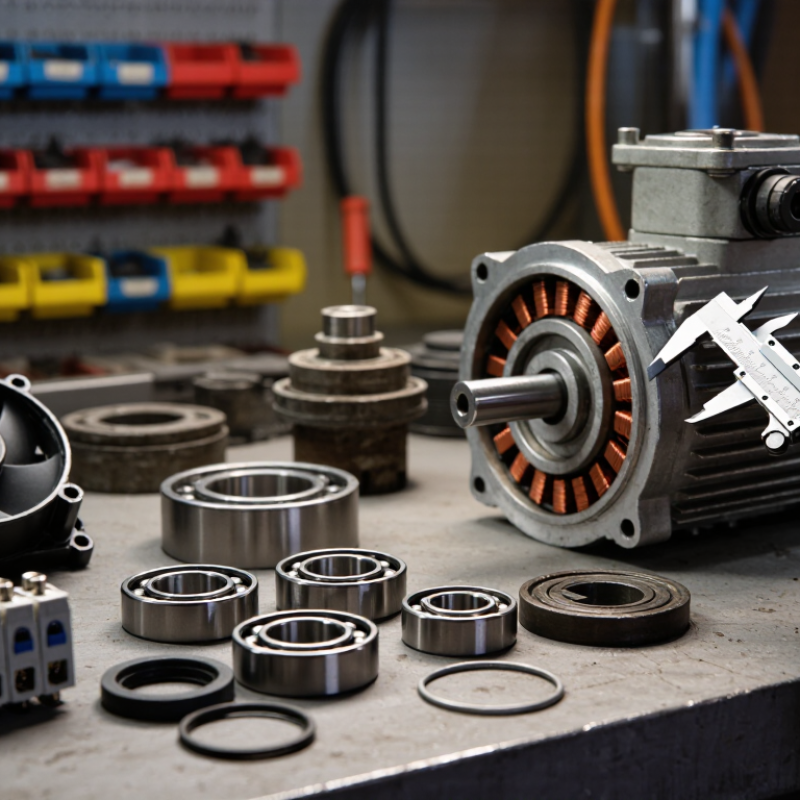
Understanding each spare part’s function prevents expensive misdiagnosis. Bearings support the shaft and control friction. A damaged bearing often creates a sharp hum, rising temperature, or visible vibration. Seals protect the housing from dust and moisture. Cooling fans remove heat from the frame. Terminal blocks maintain secure electrical connections, while brushes and holders transfer current in brushed motors. An identical-looking part may still have a different clearance, insulation class, or temperature rating.
The U.S. Department of Energy’s 2021 Motor Systems Market Assessment reports that motor-driven equipment uses roughly 68% of electricity in U.S. manufacturing. Small component losses can therefore become significant operating costs. The International Energy Agency also identifies efficient motor systems as an important industrial energy-saving opportunity.
Select parts by frame size, shaft diameter, voltage, speed, load, and operating environment. Check the motor nameplate first. Then compare the service manual, dimensional drawings, and measured tolerances.
I have seen technicians replace a bearing by appearance alone. It fitted, but failed within weeks. That shortcut was costly. A spare bearing needs the correct internal clearance and grease specification. A replacement fan also needs matching airflow and rotational direction. Inspect the original failure before ordering. Look for burnt terminals, metal dust, cracked insulation, or uneven wear. Keep these records. Yet records can be incomplete, and judgment can be wrong. For critical motors, confirm the part with a qualified engineer and test insulation resistance before returning the motor to service.
Identifying the Motor Model and Required Replacement Part
A correct spare part begins with the motor’s identity, not its appearance. Read the nameplate before opening the terminal box. Record the model code, rated power, voltage, frequency, phase, current, speed, frame size, and enclosure type. Shaft diameter, keyway size, mounting holes, and bearing numbers are equally important. A small mismatch can create vibration, overheating, or premature failure.
The International Energy Agency reports that electric motor systems consume roughly half of global electricity. The U.S. Department of Energy also estimates that motor-driven equipment uses about 68% of industrial electricity in the United States. These figures make accurate part selection an energy issue, not only a maintenance task. A replacement fan, bearing, brake, or terminal component must match the motor’s duty, insulation class, temperature rating, and operating environment. Dust, moisture, and frequent starts can change the correct specification.
Do not trust a faded label alone. Take clear photographs, measure the shaft, and compare the dimensions with the technical drawing. Check whether the motor uses standard or insulated bearings, especially near variable-speed drives. Experienced technicians still make mistakes when an old frame looks familiar. I have seen a similar bearing fitted successfully at first, then fail after several weeks. The lesson is uncomfortable: part numbers require verification from the nameplate, drawings, and maintenance records. Sources: International Energy Agency, Energy Efficiency 2023; U.S. Department of Energy, Improving Motor and Drive System Performance.
Checking Technical Specifications and Compatibility
How to Choose Electric Motor Spare Parts?
Checking Technical Specifications and Compatibility
Choosing an electric motor spare part starts with the original motor’s nameplate. Record voltage, current, frequency, power, speed, phase, and duty rating. A matching voltage alone once fooled me. The replacement still overheated because its service duty was lower.
Measure the shaft diameter, shaft length, keyway, mounting holes, frame size, and overall body length. Use a caliper instead of guessing from photographs. Check the rotation direction and terminal arrangement. Even a small mounting error can create vibration, noise, or premature bearing failure. Confirm the enclosure rating, insulation class, bearing type, and operating temperature. These details matter in dusty, wet, or hot work areas.
Compare the replacement datasheet with the motor’s maintenance records and installation drawings. Ask for dimensional drawings when the catalog description seems vague. Check rated speed carefully, especially when the motor connects to a gearbox, pump, or fan. A similar-looking motor may have a different torque curve. That mistake can reduce output or damage connected equipment. I also verify thread sizes and cable entry positions before ordering. They are easy to overlook. Keep photos of the removed part, but treat them as supporting evidence, not technical proof. Supplier claims should match recognized testing information and clear tolerance data. When specifications conflict, pause and recheck the measurements. A rushed purchase is rarely the economical choice.
Evaluating Part Quality, Standards, and Supplier Reliability
How to Choose Electric Motor Spare Parts?
Choosing electric motor spare parts requires more than matching a part number. Quality, applicable standards, and supplier reliability must work together. A bearing may fit the shaft yet fail early because of poor steel, incorrect clearance, or weak sealing. Check the motor model, load, speed, temperature, and installation environment before ordering. Small details matter.
Standards provide a useful quality reference. Review technical documents against relevant IEC requirements and the manufacturer’s original specifications. For critical components, request material records, dimensional drawings, test reports, and batch traceability. Look for clear tolerances, insulation ratings, and temperature limits. Certification alone is not proof of performance. Sometimes, paperwork looks stronger than the product.
Supplier reliability also deserves close attention. A dependable supplier should answer technical questions, confirm stock conditions, and explain replacement compatibility. Ask how parts are stored, inspected, and packaged. Moisture damage can begin inside a sealed box. A supplier with stable quality controls is safer than one offering the lowest price. Still, no supplier is perfect. I would verify a sample before approving a large order, especially when the part affects safety or production continuity. Record inspection results, installation feedback, and failure patterns. This evidence improves future purchasing decisions.
Planning Installation, Testing, and Spare-Part Management
How to Choose Electric Motor Spare Parts?
Planning Installation, Testing, and Spare-Part Management
Choosing electric motor spare parts begins before a failure occurs. Record the motor’s rated voltage, power, speed, frame size, bearing numbers, and mounting details. A photograph of the nameplate can prevent an expensive ordering mistake. Check the service environment too. Dust, moisture, heat, and frequent starts can change the suitable part specification.
During installation, keep bearings sealed until use. Store them in a clean, dry cabinet. Confirm shaft fit, key dimensions, and coupling alignment before tightening bolts. Use a calibrated torque wrench where specified. Small errors matter. Poor alignment may create vibration, heat, and early bearing damage. Follow the motor manufacturer’s instructions and applicable electrical safety requirements.
Testing should include insulation resistance, winding continuity, rotation direction, vibration, and operating temperature. Record readings before energizing and after the motor reaches normal load. Compare results with approved limits, not guesswork. A spare part that fits physically may still perform poorly electrically. Part records should include supplier details, batch information, inspection dates, and remaining quantity. Review them after every maintenance job.
A checklist helps, but it is not perfect. Technicians may record a bearing number correctly yet overlook a damaged shaft shoulder. That weakness deserves regular review. Keep critical parts available, but avoid storing every possible component. Shelf life, changing motor designs, and inaccurate forecasts can quietly waste maintenance budgets.
FAQS
The motor’s identity determines the correct dimensions, electrical ratings, and operating limits. Record the model, power, voltage, frequency, phase, speed, and frame size. Measure the shaft and keyway too. A familiar-looking motor can still need different parts.
Check rated power, voltage, current, frequency, speed, phase, frame size, and enclosure type. Photograph the nameplate before opening the terminal box. Faded labels can mislead. Verify unclear information with drawings and maintenance records.
Match the bearing number, internal clearance, insulation class, temperature rating, and grease specification. Check the shaft diameter and operating speed. Do not select by appearance alone. That shortcut may cause failure within weeks.
Listen for a sharp hum and check for rising temperature. Look for visible vibration, uneven wear, or metal dust. A rough sound matters. These signs do not prove one cause, so inspect the motor carefully.
Match the fan’s dimensions, airflow, rotation direction, and temperature rating. Confirm that it suits the motor frame and operating environment. Dust and moisture can reduce cooling performance. A fan that spins backward may cool poorly.
Seals help block dust and moisture from the housing. Terminal blocks maintain secure electrical connections. Inspect for cracked insulation, burnt terminals, loose connections, and moisture marks. Small defects can create heat and vibration.
Frequent starts, high temperatures, dust, and moisture can change the required specification. Check voltage, speed, load, insulation class, and enclosure type. Conditions matter greatly. A part suitable indoors may fail outdoors.
Compare the replacement part with the nameplate, drawings, measurements, and records. Inspect the original failure instead of replacing parts blindly. Test insulation resistance before operation. Records may be incomplete, and judgment can fail. When the motor is critical, ask a qualified engineer to confirm the selection.
Conclusion
Choosing the right Electric Motor Spare Parts is essential for maintaining motor performance, safety, and service life. Start by understanding each part’s function, whether it is responsible for power transmission, insulation, cooling, sealing, or mechanical support. Before ordering, identify the motor model, series, operating conditions, and the exact component requiring replacement. Accurate identification helps prevent installation errors and unnecessary downtime.
Next, compare key technical specifications, including dimensions, materials, voltage, current, speed, temperature range, load capacity, and mounting details. Ensure the replacement part is fully compatible with the motor and meets applicable quality and safety standards. Supplier reliability is also important, so consider product consistency, documentation, delivery capability, and after-sales support. During installation, follow proper procedures, inspect connections, and conduct functional and safety tests before returning the motor to service. Maintaining clear records and keeping critical spare parts in controlled storage can further improve maintenance efficiency and reduce future interruptions.