Choosing the right Square Frame AC Motors can affect production speed, energy costs, and maintenance planning. Global buyers often compare motors by price alone. That approach can create expensive surprises later.
This guide examines ten notable Square Frame AC Motors for industrial and commercial applications. It considers power ratings, frame dimensions, efficiency classes, mounting options, insulation systems, and protection levels. Voltage and frequency compatibility matter greatly across export markets. A motor designed for 460 V, 60 Hz service may require careful evaluation before installation in a 400 V, 50 Hz facility. Small details matter.
Real operating conditions deserve equal attention. A dusty workshop may need stronger enclosure protection. A conveyor running continuously may require a motor rated for demanding duty cycles. Buyers should also review IEC or NEMA alignment, test documentation, warranty terms, spare-part access, and local technical support. Certifications can support trust, but they do not replace a complete datasheet review.
No ranking fits every factory. That is worth admitting. A compact motor may suit a packaging line but struggle under frequent starts. An efficient model may cost more initially, yet reduce electricity use over years. However, savings depend on load, operating hours, and installation quality. This introduction provides a practical starting point, not a final purchasing decision. Verify performance claims with manufacturers, distributors, and qualified engineers before placing an international order. Compare actual duty requirements, not attractive catalog numbers.
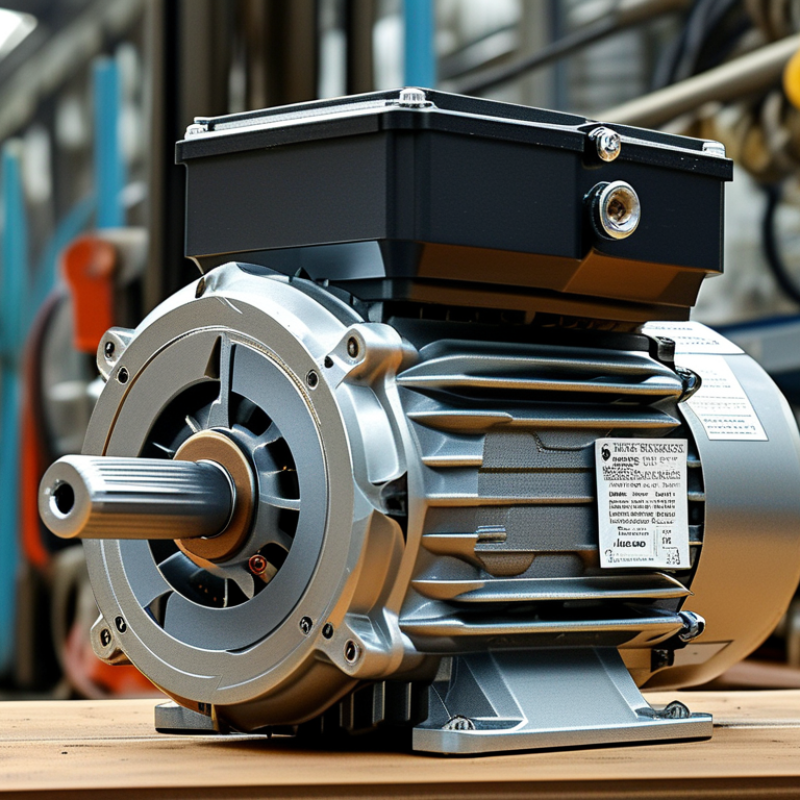
Square Frame AC Motors: Definition, Design, and Global Standards
Square frame AC motors use a compact housing with near-equal side dimensions. This shape supports stable mounting and efficient use of machine space. Most models use squirrel-cage induction designs, though synchronous versions also exist. Their performance depends on stator windings, rotor construction, bearings, cooling, and enclosure quality.
A practical review of the top 10 square frame AC motors should begin with frame size, rated power, voltage, frequency, speed, and torque. Check the nameplate carefully. A motor marked for 50 Hz may behave differently on a 60 Hz supply. Efficiency classes should align with IEC 60034-30-1 where applicable. IEC 60034 also covers key testing and operating requirements. Buyers working with North American equipment may need NEMA MG 1 dimensions or performance references. These systems are not always interchangeable.
Protection ratings matter in real installations. IP55 may suit dusty workshops, while washdown areas often require stronger protection. Observe the terminal box, shaft seal, cooling fan, and mounting feet during inspection. I have found that small alignment errors create noise and bearing heat quickly. Leave room for correction.
Do not rank motors by efficiency alone. Starting current, duty cycle, ambient temperature, insulation class, service factor, and spare-part access can change the decision. Standards improve comparison, but certificates still require verification. Some product data appears complete, yet omits permissible voltage variation or altitude limits. That deserves a second look.
Top 10 Square Frame AC Motors for Global Buyers
Common IEC Frame Sizes by Shaft Height
This chart compares ten widely used IEC motor frame designations by shaft height.
Shaft height is the vertical distance from the mounting surface to the centerline of the motor shaft,
and it is a key dimension for equipment compatibility and replacement planning. The frame designations
and shaft-height values are based on IEC 60072-1 dimensional conventions; actual motor length, mounting
arrangement, power rating, and enclosure dimensions may vary by design.
How to Compare Motor Ratings, Frames, and Performance
Top 10 Square Frame AC Motors for Global Buyers?
For global buyers, a top-ten square-frame AC motor shortlist should begin with ratings, not price. Check rated power, voltage, frequency, phase, speed, duty, and rated current. A 7.5 kW motor at 400 V may not suit a 460 V supply without confirming tolerances. Confirm whether the nameplate rating applies to continuous duty. Small details matter.
Frame comparison is more than matching a catalog number. Measure shaft diameter, shaft extension, keyway, mounting-hole spacing, foot height, and flange dimensions. Verify the frame standard used in the installation. A motor can fit the bolt holes yet misalign the coupling by a few millimeters. That error can increase vibration and bearing load. Check enclosure protection, insulation class, cooling method, and terminal-box orientation before ordering. Drawings beat assumptions.
Performance should be checked at the real operating point. Compare efficiency at 50%, 75%, and 100% load, plus starting torque, locked-rotor current, slip, noise, vibration, and temperature rise. For inverter duty, confirm insulation strength, low-speed cooling, and allowable switching conditions. Ask for routine-test data and dimensional drawings, not only a polished datasheet. One recurring mistake is choosing the highest efficiency figure while ignoring frequent starts. A seemingly suitable motor may overheat when its service pattern is underestimated. Record the reason for every selection, and verify uncertain details before shipment.
Top 10 Square Frame AC Motors for Global Buyers? - How to Compare Motor Ratings, Frames, and Performance
Representative IEC Metric Square-Frame Three-Phase AC Motors — 4-Pole, 50 Hz, Squirrel-Cage Design
| Rank |
Typical Motor Configuration |
Rated Output
(kW) |
IEC Frame |
Nominal Speed
(r/min) |
Rated Voltage
(V) |
Approx. Current
at 400 V (A) |
Efficiency
(IE3, %) |
Power Factor
(cos φ) |
Rated Torque
(N·m) |
Ingress Protection |
Insulation / Duty |
Approx. Shaft
Diameter (mm) |
Typical Application Fit |
| 1 |
Compact general-purpose motor |
0.75 |
80 |
1,430 |
230/400 |
1.8 |
80.7 |
0.72 |
5.0 |
IP55 |
Class F / S1 |
19 |
Small pumps, fans, conveyors, and machine tools |
| 2 |
Light-duty industrial motor |
1.1 |
90S |
1,440 |
230/400 |
2.5 |
82.7 |
0.75 |
7.3 |
IP55 |
Class F / S1 |
24 |
HVAC fans, compressors, small material-handling systems |
| 3 |
Standard-purpose motor |
1.5 |
90L |
1,445 |
230/400 |
3.3 |
84.1 |
0.78 |
9.9 |
IP55 |
Class F / S1 |
28 |
Pumps, belt drives, fans, and agricultural equipment |
| 4 |
Medium-duty process motor |
2.2 |
100L |
1,460 |
230/400 |
4.8 |
85.9 |
0.81 |
14.4 |
IP55 |
Class F / S1 |
28 |
Compressors, mixers, machine tools, and conveyors |
| 5 |
Heavy-duty general-purpose motor |
3.0 |
100L |
1,465 |
230/400 |
6.4 |
88.1 |
0.82 |
19.5 |
IP55 |
Class F / S1 |
28 |
Pumps, fans, conveyors, crushers, and packaging equipment |
| 6 |
Industrial drive motor |
4.0 |
112M |
1,470 |
230/400 |
8.3 |
89.6 |
0.83 |
26.0 |
IP55 |
Class F / S1 |
38 |
Industrial pumps, blowers, compressors, and production lines |
| 7 |
High-efficiency process motor |
5.5 |
132S |
1,475 |
230/400 |
11.2 |
90.4 |
0.84 |
35.6 |
IP55 |
Class F / S1 |
42 |
Continuous-duty pumps, fans, compressors, and conveyors |
| 8 |
Large-frame industrial motor |
7.5 |
132M |
1,475 |
230/400 |
15.0 |
91.4 |
0.85 |
48.5 |
IP55 |
Class F / S1 |
48 |
Industrial ventilation, water treatment, and material handling |
| 9 |
Heavy industrial motor |
11 |
160M |
1,480 |
400/690 |
21.8 |
92.9 |
0.86 |
70.9 |
IP55 |
Class F / S1 |
55 |
Large pumps, compressors, crushers, and process machinery |
| 10 |
High-power continuous-duty motor |
15 |
160L |
1,480 |
400/690 |
28.6 |
93.6 |
0.86 |
96.8 |
IP55 |
Class F / S1 |
55 |
Industrial pumps, fans, compressors, and heavy conveyors |
Comparison notes: Values are representative IEC metric selections for 4-pole, 50 Hz, three-phase induction motors. Efficiency figures correspond to typical IE3 performance levels; current values are approximate at 400 V and vary with motor design, temperature, and load. Frame numbers, shaft dimensions, mounting details, and electrical ratings should be confirmed against the final motor datasheet before purchase.
Top 10 Square Frame AC Motor Options for Global Buyers
Top 10 Square Frame AC Motor Options for Global Buyers
For global buyers, square frame AC motors should match voltage, frequency, load, and installation space. The top 10 options include standard three-phase, single-phase, high-efficiency, inverter-duty, brake, low-noise, compact, corrosion-resistant, washdown, and customized-voltage motors. Each choice serves a different operating environment. Details matter.
A three-phase motor often suits conveyors, pumps, compressors, and fans. Single-phase models fit smaller machines with limited power access. High-efficiency designs can reduce energy use during long shifts. Inverter-duty motors support variable-speed drives, but cable length and grounding still need attention. Brake motors help stop vertical loads safely. Corrosion-resistant housings suit humid workshops, while washdown versions handle frequent cleaning. Compact frames help when the mounting area is tight. Low-noise models improve comfort near operators.
From practical equipment checks, buyers should compare rated power, speed, insulation class, IP protection, duty rating, shaft size, and bearing design. Confirm the motor’s voltage and frequency before ordering. Ask for test reports, dimensional drawings, wiring diagrams, and operating limits. Keep spares simple. A motor may appear efficient, yet poor ventilation can shorten its service life. I have also seen projects focus heavily on price and overlook local service support. That choice can create long delays after a minor failure. No single option fits every country or machine. Recheck the selection with a qualified engineer, especially when ambient temperature, altitude, or frequent starts may change performance.
Applications, Efficiency Classes, and Environmental Requirements
Top 10 Square Frame AC Motors for Global Buyers: Applications, Efficiency Classes, and Environmental Requirements
Square frame AC motors serve pumps, fans, conveyors, compressors, machine tools, and agricultural equipment. Their compact geometry supports easier installation where mounting space is limited. Buyers should match torque, speed, duty cycle, voltage, frequency, and starting method to the driven load. A motor sized only by horsepower may overheat during frequent starts or variable loads.
Efficiency classes commonly range from IE1 to IE5 under IEC 60034-30-1. Higher classes can reduce electricity costs, especially in continuously operating pumps and ventilation systems. Yet nameplate efficiency does not show every operating loss. Variable-frequency drives, poor alignment, low load, and harmonics can change actual performance. Check measured data at the expected load point.
Environment matters.
Use the appropriate IP rating for dust and water exposure. Confirm insulation class, ambient temperature, altitude, cooling method, and allowable humidity. Coastal sites may require stronger corrosion protection, while dusty processing areas need careful enclosure selection. IEC 60034-5 and local electrical codes provide useful reference points. Regional energy rules may differ, so verify compliance before shipment. A common mistake is choosing a highly efficient motor without checking service conditions. That decision looks good on paper, but it may perform poorly in a hot, dusty plant. Proper documentation, test records, and clear warranty terms make global purchasing more reliable.
Purchasing Factors: Certification, Customization, and Supplier Support
Top 10 Square Frame AC Motors for Global Buyers?
When comparing square frame AC motors, certification should match the destination market and installation environment. Check IEC 60034 compliance, efficiency data, insulation class, and documented test results. Some markets may also require regional approvals, such as CE or UL recognition. Do not trust a certificate image alone. Ask for the certificate number, issuing body, scope, and validity. A motor rated IP55 may suit a dusty workshop, but outdoor or washdown areas may demand stronger protection.
Customization affects both performance and installation time. Confirm voltage, frequency, frame size, mounting type, shaft dimensions, terminal box position, brake needs, and thermal protection. Request a dimensional drawing before production. A small shaft mismatch can delay an entire assembly line. Supplier support matters just as much. Reliable suppliers provide samples, inspection records, wiring diagrams, spare-part guidance, and clear warranty terms. Response speed is useful, but technical accuracy matters more. Fast replies cannot repair incomplete data.
Tips: Send a detailed application sheet. Include load profile, ambient temperature, altitude, duty cycle, and inverter use. Ask for a sample or factory acceptance test when risk is high. Recheck every drawing. People sometimes miss the simplest dimension. Also, leave room for review. An apparently perfect specification may still overlook noise, starting torque, or local service capability.
FAQS
: Compare power, voltage, frequency, phase, speed, duty, and rated current. A 7.5 kW motor for 400 V may not suit a 460 V supply. Check the nameplate tolerance and continuous-duty rating. Details matter.
Measure the shaft diameter, shaft extension, keyway, foot height, and mounting-hole spacing. Check flange dimensions and the installation’s frame standard. Matching bolt holes does not guarantee correct coupling alignment. A few millimeters can increase vibration and bearing load.
Compare efficiency at 50%, 75%, and 100% load. Review starting torque, locked-rotor current, slip, noise, vibration, and temperature rise. The highest efficiency figure is not always the best choice. Frequent starts may create extra heat.
Confirm insulation strength, low-speed cooling, and allowable switching conditions. Review the motor’s heating behavior at reduced speed. A standard motor may struggle with repeated low-speed operation. Not always obvious.
Higher efficiency can reduce electricity costs during long operating hours. This matters for pumps, fans, and ventilation equipment. Actual losses also come from poor alignment, low loads, harmonics, and drive settings. Check measured data near the expected load point.
State the dust and water exposure, ambient temperature, altitude, humidity, and cooling method. Choose an enclosure protection level suitable for the site. Coastal areas may need stronger corrosion protection. Dusty facilities need careful enclosure selection.
Request dimensional drawings, wiring diagrams, routine-test records, inspection documents, and clear warranty terms. Ask for certification details, including the number, issuing body, scope, and validity. Do not rely on a certificate image alone. Drawings beat guesses.
Send the load profile, ambient temperature, altitude, duty cycle, voltage, frequency, and inverter details. Include shaft dimensions, mounting type, terminal-box position, brake needs, and thermal protection. Request a sample or factory acceptance test when failure would be costly. I may still miss one simple dimension.
Conclusion
Square Frame AC Motors are compact, practical, and widely adaptable solutions for industrial equipment, commercial systems, and manufacturing machinery. This article explains their basic structure, operating principles, square-frame design, and the importance of meeting recognized global standards. It also shows buyers how to compare power ratings, voltage, frequency, speed, frame dimensions, torque, efficiency, noise, and operating performance when selecting a suitable motor.
The guide presents ten representative motor options for different load requirements and working conditions, without focusing on any specific brand. It also reviews application environments, efficiency classes, protection ratings, temperature ranges, and environmental considerations. For international purchasing, key factors include certification, documentation, customization capabilities, delivery reliability, warranty terms, technical assistance, spare parts availability, and long-term supplier support. Together, these points help global buyers choose a safe, efficient, compatible, and cost-effective motor for their specific needs.